The Reverence Method™
A returning, not a quick fix.
A body-based therapeutic modality and pathway that honours the wisdom of the female body, the female nervous system, and the transitions women move through across their lives.
My own journey, my one-to-one work and my retreats is where Reverence was formed. The word reverence means to be in awe, and to hold deep respect. For me, each pillar within this framework emerged through my own process. Before I trained, I experienced each modality. Learning how to meet all parts of myself with respect.
The Reverence Method™ holds the full scope of my work: my training, my clinical and somatic experience, and my own lived journey. It brings together the pillars that support women to restore nervous system health, process trauma, attune to the true rhythms of the female body, and reclaim their sexuality, vitality and aliveness. Themes that support real autonomy and inner safety.
Rather than switching between modalities, the pillars meet and inform one another in response to what's present and what you desire. The body leads the work. Pace, safety, and capacity guide how and when / if certain pillars unfold.
This is a space that honours complexity and autonomy. Insight, sensation, emotion, mess and meaning are allowed to coexist, creating the conditions for women to return to their bodies and their wholeness.
Available both online & in-person.
TRM stretches at the edges of traditional therapy. It weaves in modalities that are less commonly held within traditional spaces such as bodywork, internal pelvic work, menstruality work, wild woman exploration (women who run with the wolves), and somatic approaches to trauma, sexuality and pleasure. Many of these approaches are deeply therapeutic, yet often under-recognised or misunderstood within therapeutic practices. My work is devoted to integrating them ethically, safely, with the intention to expand the modalities women have access to and as a result the healing women have access to.
As a practitioner I have a depth of experience holding sexual trauma and Reverence is a modality that specialises in both adult and child sexual trauma. Sexual violation often lives in the body long after the event itself, shaping how safety, intimacy, desire, the menstrual cycle, menopause symptoms, pregnancy and birth are experienced. This work meets that gradually and safely, through trauma-led somatic practice, and, when or if, the body is ready, through the deeper territory that most holistic / therapeutic work tends to leave out: conscious self-pleasure, erotic energy connection, internal and external pelvic de-armouring, arousal, fantasy, intimacy. Always paced by nervous system safety, consent, and readiness.
At the centre of it all is pleasure, not as an end point, but as a healing force in its own right. Reclaiming pleasure is reclaiming aliveness, sovereignty, embodied consent and a relationship with your body that isn't organised around what happened to it.
The work is embodied, relational, deeply responsive and very effective.
Why I believe, sexuality belongs in the conversation

There's a quiet assumption that trauma healing and sexual liberation can't sit in the same room, that once someone has experienced sexual violation, sexuality becomes something to manage, stay disconnected from or protect rather than reclaim. This idea is influenced by the work of Staci Haines, whose writing on somatic healing and sexual trauma names how radical it actually is for a survivor to step into conscious sexuality work at all, given how thoroughly the world has taught us these two things cannot coexist.
But sexual trauma is a violation of the sexual self, not only the physical or emotional self. Leaving sexuality out of the healing conversation or, leaving the pelvis and the genitals out of a woman’s process entirely in my opinion, leaves out one of the most important paths back to reclaiming autonomy and feeling connected to your body, to the people around you, and to yourself. This isn’t just valid for women who’ve experienced sexual trauma, it’s a vital part of healing for all women, as our bodies are oxytocin driven meaning pleasure has a physiological impact on the nervous system. And most women carry shame, stigma, lack of knowledge, unhelpful experiences or stories around sexuality.
Slowly bringing trauma processing and sexual healing into the same room lets a woman finally differentiate between the two. Sex stops being only linked to what happened, and starts being something that can exist on its own terms again. The body has to come back online, attuning to sensation, signals and emotions. One of the most important parts of tis process is developing personal choice and consent: understanding what autonomy actually feels like in your own body, after an experience that took it away.
This is the work TRM can support with, given I’m trained as both a somatic psychotherapist and sexologist, and I have personal experience. I support women to become sexually empowered and liberated, reconnecting to sexual identity, autonomy and expression as part of their wholeness: feeling and expressing consent, exercising choice, holding boundaries that actually support them. Learning to trust themselves again, and letting go of the experiences, cultural narratives, or self-beliefs that have kept them sexually and somatically disconnected.
The four pillars
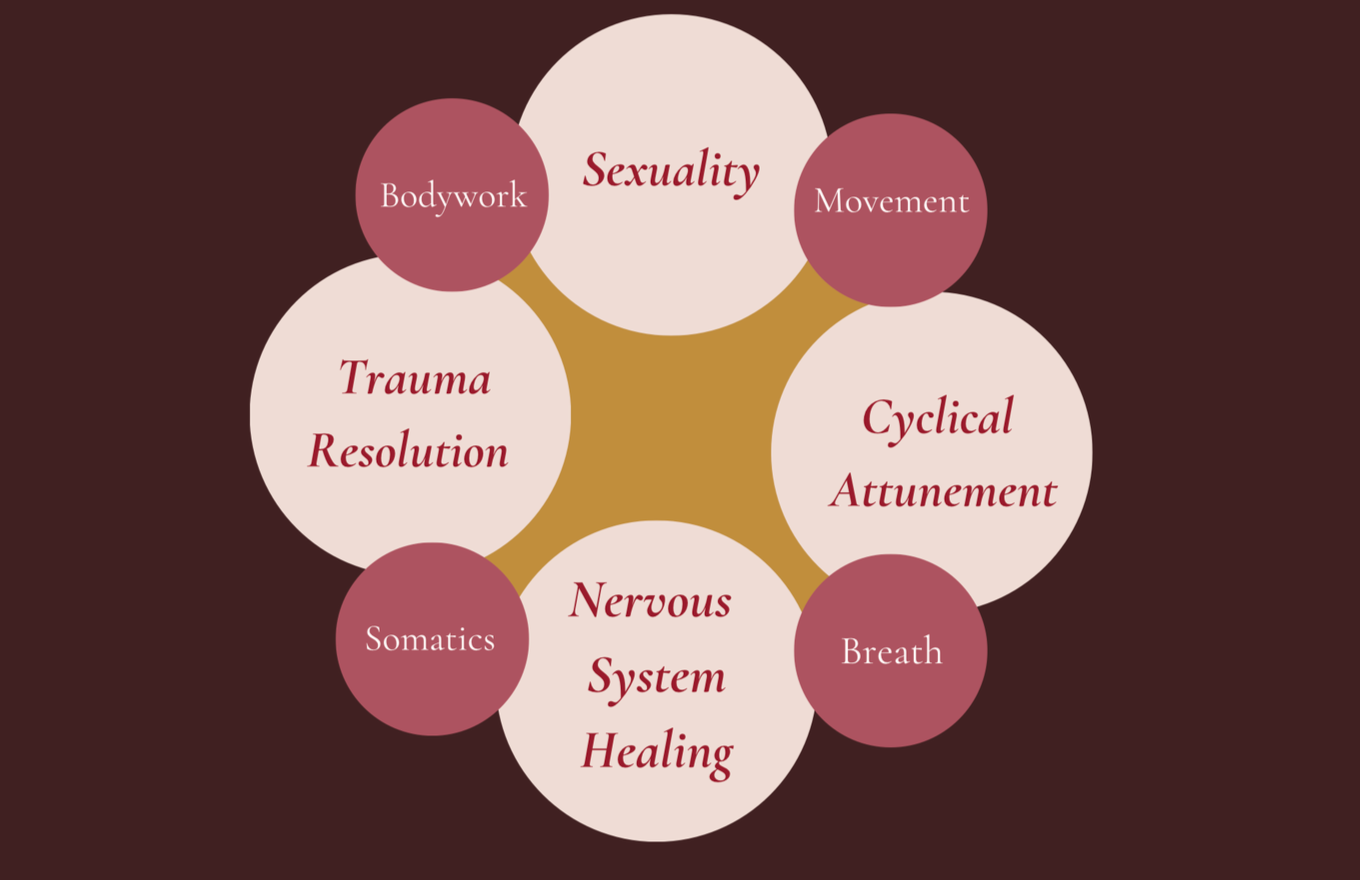
Nervous System Healing: Helping with day-to-day nervous system symptoms. Restoring regulation, somatic awareness/connection and helping build capacity so the body can safely start to orient towards feeling safer internally to support processing and integration of deeper emotional and somatic material.
Trauma Resolution Supporting the body to release and integrate trauma held in the nervous system, fascia and physical / mental / emotional body..
Cyclical Attunement Reconnecting women with the natural rhythms of the female body. menstrual and nervous system cycles, hormonal shifts/life arcs and changing capacity.
Sexuality Reclaiming sexuality as part of wholeness: pleasure, somatic connection, desire, intimacy and embodied aliveness.
These pillars are supported through somatics, breathwork, bodywork and movement.
The Reverence Method is embodied, relational and responsive. The body leads the work. Pace, safety and capacity guide how and when things unfold. This work requires time and continuity, which is why 1:1 work is offered as a longer-term therapeutic commitment. This structure protects the process, honours the body, and allows real change to happen.
For a full list of the training / experience I have that has influenced TRM check the ABOUT page